What Insurance Does a Small Business Need in Florida?
What Florida law requires of a small business, what comes from licenses and contracts, and the coverages owners ask about, from workers' comp to BOP.

If you own a small business in Florida, the first question is usually "what am I required to carry?" The short answer is that state law sets fewer requirements than most owners expect.
Here is the short version.
The requirements written into law are specific. They come from workers' compensation law, from vehicle law and from the licenses of certain trades.
A lot of what people call "required" comes from contracts. Your landlord, a client or a lender may set insurance terms of their own.
The rest is the owner's decision. The Small Business Administration (SBA) says laws requiring insurance vary by state, so what applies to you depends on your business, your license, your employees, your vehicles and your contracts. It is a decision to make with a licensed person who can look at your real situation.
Before you go on, think about these questions:
- Do you have employees, and how many?
- Do you or your staff drive for work?
- Does your trade need a state license?
- Does a lease or a client contract set insurance terms?
- Do you work from a shop, an office or your home?
The details are below.
What does Florida law require of a small business?
Workers' compensation: four employees, or one in construction
Under the definition of "employment" in section 440.02 of the Florida Statutes, a private employer outside construction is covered when it has four or more employees. In construction the line is one or more. Agriculture follows its own rule, so farm owners should read the Division of Workers' Compensation coverage requirements.
The same Division page explains the owner exemption:
- An officer of a corporation can ask for an exemption. In construction, up to three officers per group can.
- A sole owner or partner outside construction is generally not counted as an employee unless they elect to be covered.
- The exemption belongs to the owner. It is not an exemption for the business.
- A contractor should check that a subcontractor has coverage. Without it, the subcontractor's employees can become the contractor's employees for benefit purposes.
Business vehicles
Under section 627.733, the owner of a vehicle that needs Florida registration must keep security on it continuously while it is registered. The basic amounts are:
- Personal injury protection (PIP): $10,000 for medical and disability benefits and $5,000 for death benefits, under section 627.736.
- Property damage liability: $10,000, or a $30,000 combined policy of property damage and bodily injury, under section 324.022.
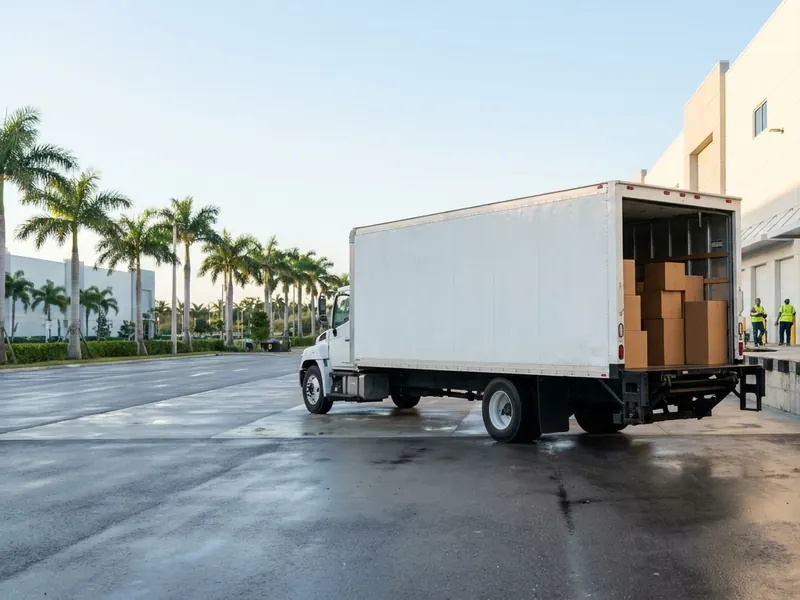
- Heavier commercial vehicles: at a gross weight of 26,000 pounds or more, section 627.7415 sets combined minimums of $50,000 (26,000 up to 35,000 pounds), $100,000 (35,000 up to 44,000) and $300,000 (44,000 or more).
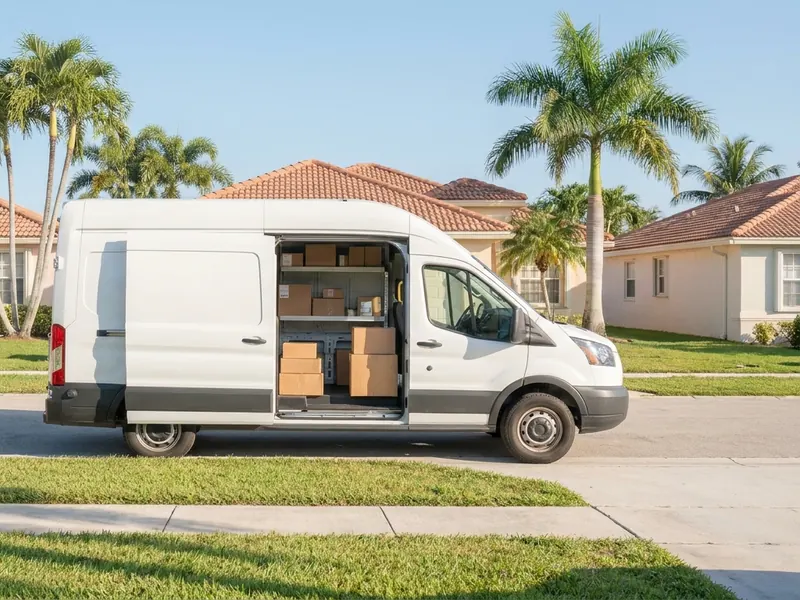
Those are legal floors. Whether a vehicle belongs on a personal or a commercial policy depends on how it is used. Our articles on courier van insurance and box truck insurance go deeper, and our page on commercial auto insurance covers cars, pickups and mixed fleets.
Licensed trades
Section 489.115 governs certification of contractors. In it, the applicant attests to workers' compensation coverage and to public liability and property damage insurance in amounts set by rule of the licensing board. We don't repeat dollar amounts here because they come from board rules; read the current rule for your license category. Contractors who build or renovate may also look at builders risk insurance.
Reemployment tax is not an insurance policy
Florida's reemployment tax is a state tax. It is a separate program, not an insurance policy. If you have employees, check the Florida Department of Revenue's reemployment tax page to see whether you must register.
Does an LLC need insurance in Florida?
An LLC is a way of organizing a business. It is a legal structure, not insurance. Whether coverage is required still depends on what the business has: employees, vehicles, a professional or trade license and contracts. The rules above apply to the business whatever its legal structure is. What an LLC changes legally is a question for an attorney, and what it means for your coverage is a question for a licensed person at an agency.
What do landlords, clients and lenders ask for?
Many insurance requirements are not in the statutes at all. They are in the contract. A commercial lease, a client agreement, a vendor application or a loan may ask for:
- Specific coverages, and minimum limits for each
- A named party added to the policy
- A certificate of insurance to show it
Read the insurance section before you sign, and send it to us early. Our article on what a certificate of insurance is explains the document, and the certificate request page is for current clients.
What type of insurance should a small business carry?
There is no single list. The SBA and the Insurance Information Institute (Triple-I) describe the same core areas, and many owners consider them:
- General liability. Claims that someone was injured or that their property was damaged because of your business.
- Commercial property. Your building, equipment, inventory and furnishings.
- Business owner's policy (BOP). A package that combines property and liability coverage.
- Commercial auto. Vehicles the business owns or uses.
- Workers' compensation. Employee injuries and illnesses at work.
- Professional liability (errors and omissions). Claims about the advice or services you provide.
Which of these matter depends on the work you do. A restaurant has different risks from a consultant or a landscaper; see our page on restaurant insurance as one example. Our small business insurance page shows how we approach it.
What a business owner's policy does not cover
A BOP is often the first policy a small business looks at because it puts property and liability coverage in one package. The Triple-I explains that it does not include:
- Professional liability
- Commercial auto
- Workers' compensation
Owners sometimes assume a BOP is everything. It is not. Ask what is outside it and how those risks are covered separately.
Working from home: is the homeowners policy enough?
According to the Triple-I's guide to insuring a home-based business, a homeowners policy gives low limits for business equipment kept at home. A business with clients, stock or employees can have exposures that a homeowners policy was not written for. Tell your insurer you work from home and ask, in writing, what is and is not covered.
What does small business insurance cost in Florida?
We don't publish prices here, because the price depends on facts that change from one business to the next. Insurers generally look at:
- What you do. Your type of work and how risky it is.
- Where you operate. The location, the building and its condition.
- Size. Payroll, revenue and the number of employees.
- Vehicles and drivers. What you drive and the records of the people driving.
- History. Prior insurance and claims.
- Limits and deductibles. Higher limits and lower deductibles cost more.
- Contracts. The limits a lease or a client requires.
How to decide with a licensed person
Gather these before you ask for a quote:
- What the business does, and how long it has operated
- The address, and whether you own or rent
- Number of employees and payroll, including part-time
- Vehicles used for work and who drives them
- Your license type, if the trade is licensed
- The insurance section of your lease or client contracts
- Current policies, if you have any
Our view
The right coverage is the one written for what your business really does. State law covers a few clear situations. Contracts add more. The rest depends on your own risks, and that is a conversation with a licensed person.
Send us the details above. We work with several insurance companies, in English and Spanish, and our licensed team will go over the options with you.
See our small business insurance page or request a business insurance quote.
This article explains in general terms how insurance requirements for small businesses work in Florida. It is not legal advice and it doesn't change any policy. The law, your license, your contracts and the policy wording decide what applies to you. For questions about your coverage, talk to a licensed agency.
Frequently asked questions
Does Florida require general liability insurance for a small business?
It depends on the business, the license and the contracts. The Small Business Administration says laws requiring insurance vary by state, and the most common requirements come from workers' compensation law, vehicle law, trade licensing and contracts such as a commercial lease. Ask a licensed person at an agency to check what applies to your business.
How many employees before workers' compensation applies in Florida?
Under the definition of employment in section 440.02 of the Florida Statutes, a private employer outside construction is covered when it has four or more employees, and in construction one or more. Agriculture has its own rules, so check the Division of Workers' Compensation if you farm.
Do I need workers' comp if I'm the only owner?
It depends on the business type and on whether you have employees. According to the Division of Workers' Compensation, a sole proprietor or partner outside construction is generally not counted as an employee unless they elect coverage, and an officer of a corporation can apply for an exemption (in construction, up to three officers per group). The exemption belongs to the owner, not to the business. Confirm your case with the Division.
Is commercial auto insurance required in Florida?
Florida requires the owner of a vehicle that needs registration to keep the required security continuously. That means $10,000 of personal injury protection and $10,000 of property damage liability (or a $30,000 combined policy of property damage and bodily injury). Commercial vehicles of 26,000 pounds or more have higher minimums. Whether your vehicle needs a commercial policy depends on how it is used.
Do contractors need insurance in Florida?
Contractor certification under chapter 489 asks the applicant to attest to workers' compensation coverage and to public liability and property damage insurance in amounts set by board rule. Check the current board rule and your license category before you apply.
Is professional liability (E&O) insurance required?
Some professions, licenses and contracts require it and others do not, so the answer depends on what you do and who you work for. If a client contract asks for it, the contract tells you the limits. Ask a licensed person at an agency how it applies to your work.
What does a business owner's policy (BOP) not cover?
According to the Insurance Information Institute, a BOP combines property and liability coverage but does not include professional liability, commercial auto or workers' compensation. Those are written separately.
Does my homeowners policy cover my home-based business?
Usually only in a limited way. The Insurance Information Institute notes that a homeowners policy gives low limits for business equipment kept at home. Tell your insurer about the business and ask in writing what is and is not covered.
Do landlords and clients ask for proof of business insurance?
A lease or a client contract often sets insurance requirements, and they are separate from state law. Read the insurance section of the contract. A certificate of insurance is the document usually used to show the coverage.